Considerations for Protesting as a Diabetic
Exercising your first amendment rights while disabled in America
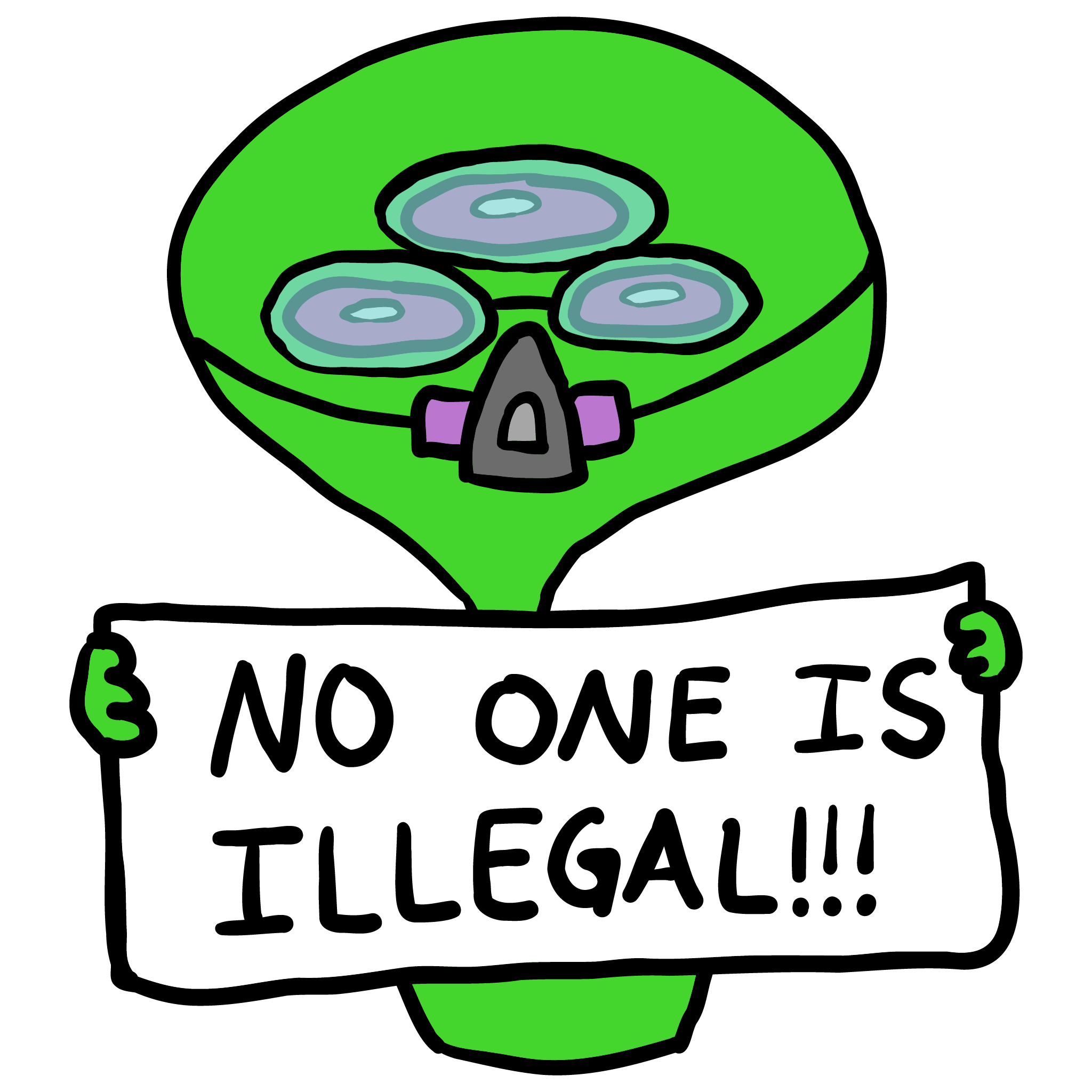
There is no single answer to any of the questions and concerns we are about to discuss. This is not meant to be a step by step how-to-guide. This is not legal or medical advice. We are providing information for you to use in your own risk assessment for yourself and the situation you find yourself in.
Protests in the United States
Immigration and Customs Enforcement and other federal agencies are currently occupying parts of Minnesota. On January 24 Alex Pretti, a 37-year-old ICU nurse, was shot and killed by Border Patrol agent Jesus Ochoa and Customs and Border Protection officer Raymundo Gutierrez. This murder came weeks after Renee Good, a 37-year-old writer and mother, was also shot and killed by federal occupying forces in South Minneapolis. Both of these killings occurred close to where George Floyd was murdered by a police officer in 2020. According to Dr. Claire Finkelstein, Director of the Center for Ethics and the Rule of Law at the University of Pennsylvania, this is how a civil war in America can start.
Prism reported, “ICE officials have sought to frame [Good's] killing as justified, and the Trump administration has characterized Good as a ‘domestic terrorist,’ with immigrant rights groups and civil liberties advocates strongly disputing both claims.”
ICE’s violent occupation of Minnesota comes after their deadliest year since 2004. The Guardian reported that 32 people died in ICE custody in 2025. Last October, ICE stopped paying their contracted doctors who treated detainees, despite an 82.5% increase in inmate population during 2025.
Nenko Gantchev, a 56-year-old Bulgarian man, died December 15, 2025 making his the last death of the year. He was being held at the North Lake processing center in Baldwin, Michigan. According to The Guardian, “Gantchev was ‘discovered unresponsive on the floor of his cell during routine checks.’”
The Serbian Times reported Gantchev was a type 2 diabetic, and had been complaining about his deteriorating health for months. “‘There was no special diet. The food they were given was not adequate to maintain blood sugar levels,’ said family friend Ana.”
According to Mother Jones, “ICE’s failure to pay its bills for months has caused some medical providers to deny services to ICE detainees… In other cases, detainees have allegedly been denied essential medical care by ICE."
Luis Gustavo Nunez Caceres, a 42-year-old Honduran man, died on January 5, after being transferred to a hospital in Houston from the detention facility he was imprisoned at in Conroe, TX, due to heart problems. Luis Beltran Yanez-Cruz, a 68-year-old Honduran man, died on January 6, after being transferred to the hospital from the Imperial Regional Detention Facility in Calexico, CA, also due to heart problems. January 7, the same day Good was murdered, Parady La, a 46-year-old Cambodian man, died due to medical neglect while in ICE custody in Philadelphia, PA.
Pretti’s father told the Associated Press his son felt protesting was a way to show care for others. In honor of Pretti, for Gantchev, all the diabetics, and everyone who has been maimed and killed by ICE throughout their violent history, we present to you: Considerations for Protesting as a Diabetic…

If you’re going to protest
Protesting right now, especially in areas where ICE is very active, carries significant risk regardless of ability. If you are particularly nervous about protesting, you should seriously consider if it’s the right choice for you. Being nervous to the point of distraction, can endanger yourself and others around you! Know yourself and your limits for what you can handle. There are other ways to help! Instead of protesting you could volunteer with a local bail fund, or financially support immigration focused nonprofits and mutual aid projects, like these ones in Minnesota.
(1) Attending and contact plan
Due to the complicating factors of diabetes, you may want to consider going with another person or group of people. Regardless, you’ll want to designate a contact person who isn’t attending. Before you go out to protest, set a timeline for your contact person to escalate searching for you, in the event you don’t check-in after the demonstration.
(2) General diabetes care
You will want to keep anything you’ll need to care for your diabetes on your body. Wear clothes with large pockets that zip. Bags can be pulled off, used to grab you, and in the event you’re arrested or detained, either confiscated or discarded altogether. Keeping water, candy, testing supplies, and medication on your person is ideal.
Protesting can cause your blood sugar to go up or down. Using a lot of physical energy, especially walking around for hours, can be a significant workout. The stress of police/ICE presence could also cause your blood sugar to run high. Being prepared for highs and lows is key.
(3) Phones, insulin pumps, CGMs, and AID systems
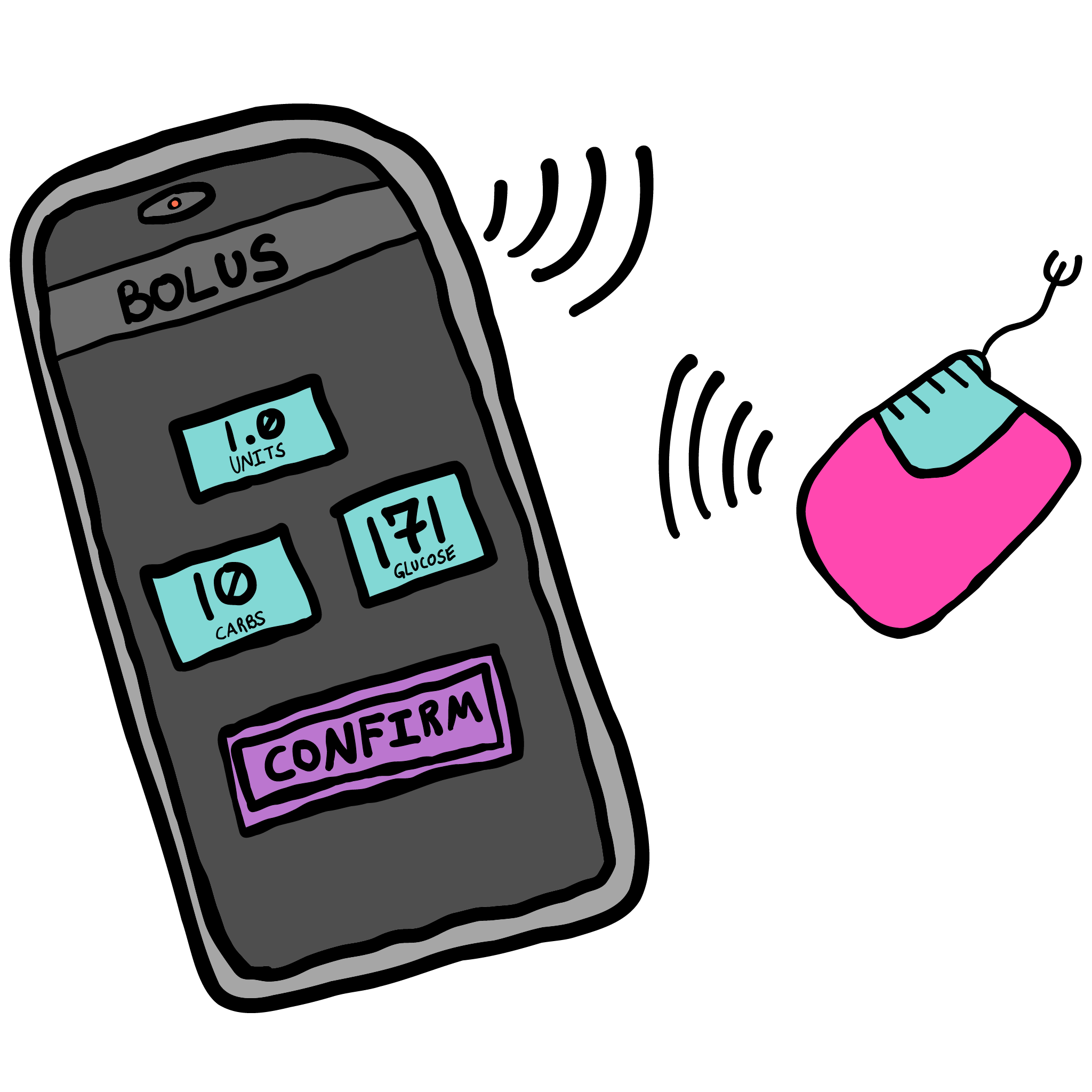
While mobile phones are a significant part of diabetes care these days, with continuous glucose monitors and insulin pumps, bringing one is a significant risk. If your insulin pump communicates with your CGM, you likely have an automated insulin delivery (AID) or closed-loop system. Losing access to your phone can cause you to lose the ability to monitor your blood sugar and/or control your insulin pump.
It’s possible that anything you have on you, like an insulin pump, could be damaged while at a protest, or in the event of your arrest. Law enforcement could use pepper spray, mace, rubber bullets, stun grenades, and other means to violate you and your property. Insulin pump users who are comfortable with multiple daily injections, might consider doing MDI while protesting, if they’re particularly concerned about their pump being damaged.
If you are wearing medical devices, in order to prevent confusion in chaos, some may want to label their CGM and pump sites. Our preferred way is drawing directly on your skin with a permanent marker. Having “insulin pump for diabetes” written right next to your pump site, which you’ve circled, makes it harder for law enforcement to justify ripping it off you because they “didn’t know what it was.” You may also want to write your diagnosis on an easily accessible body part, like your arm, regardless of if you wear devices.
If your care for your diabetes depends on your mobile phone, or another device to control it, here are some risks to consider:
- Without being detained or having your phone physically taken, ICE can intercept your text messages, compel your phone carrier to disclose information about your movements, and use technology that impersonates a cellphone tower to keep a record of your identity and attendance of the protest.
- Even if your phone is off, your devices may communicate with each other over Bluetooth, which can also be tracked.
- Is your pump primarily controlled through your phone? (Examples: Omnipod 5, Tandem Mobi, DIY loop.) Do you have a back up plan if you can’t access your phone?
- Are your devices fully charged? How long can you go without charging?
- When will you need to change your sites and sensors next?
- Insulin pumps and CGMs usually communicate over Bluetooth. Areas with a lot of wireless network activity (large groups of protestors with cellphones) can interfere or block your devices from communicating with each other.
(4) Care for devices
If your continuous glucose monitor or pump site is pepper sprayed or maced, you will need to take it off. Only put a new one on after washing your entire body thoroughly, with something like baby shampoo, in cold or lukewarm water. If you’re pepper sprayed or maced, and you don’t think the substance got on your pump/CGM site, it may be wise to change them anyway. Even small amounts, if kept in contact with your skin, can cause rashes, blisters, and burns. Poynter has published a guide for how to handle being pepper sprayed.
(5) Surveillance at protests
Federal agents will be using facial recognition software to identify people at protests. Wearing sunglasses and a face covering can protect your identity, and wearing a mask also prevents the spread of covid, flu, and other contagious respiratory illnesses. Unfortunately this may not be enough to fully thwart their facial software; a full face mask is likely to be more effective.
404 Media reported Department of Homeland Security documents state individuals are not allowed to decline having their faces scanned with ICE’s AI software. “Photos captured by Mobile Fortify will be stored for 15 years, regardless of immigration or citizenship status.”
It’s best to take public transportation or walk to a protest. Law enforcement has long been using license plate readers that scan your car when you drive by them, and even without the more advanced means of tracking you, a car registered to you or a loved one being near a protest is just another way for law enforcement to log your whereabouts.
If you’re going to bring a phone, turn off your biometric lock (using your finger print or facial recognition to unlock.) It’s easy for an agent to force your hand or hold your phone up to your face to unlock it. Law enforcement needs a warrant to compel you to enter a password or passcode into one of your devices, making it the safer option. In some states law enforcement may also need a warrant to compel you to biometrically unlock your device. This is an evolving area of law, and therefore in the meantime passwords and passcodes are still the more secure option.
If arrested
You could be peacefully protesting, see ICE agents assault or kill someone, and find yourself detained because you witnessed a federal agent commit a crime. If you live in an area where ICE is active, your chances of being arrested or detained simply for existing in your neighborhood are now elevated, particularly if you’re not white. You might be a citizen hoping to get yourself arrested, to distract ICE from your undocumented neighbors and friends.
Regardless of the events that occurred before, people’s experiences throughout the arrest process vary wildly, partly because ICE haphazardly hired so many new agents. Here’s what the ACLU says you generally should do if you’re stopped by law enforcement while protesting:
- “Stay calm. Make sure to keep your hands visible. Don't argue, resist, or obstruct the police, even if you believe they are violating your rights. Point out that you are not disrupting anyone else's activity and that the First Amendment protects your actions.
- Ask if you are free to leave. If the officer says yes, calmly walk away.
- If you are under arrest, you have a right to ask why. Otherwise, say you wish to remain silent and ask for a lawyer immediately. Don't say anything or sign anything without a lawyer.”
The moment you are in custody you are no longer in control. You have rights, and are legally obligated to receive medical care in this situation, but that doesn’t mean it will happen. You’ll likely be limited in how you’re able to control your medical care.
According to Robin D. G. Kelley, Gary B. Nash Endowed Chair of U.S. History at UCLA, “There is a fundamental difference between [police] abductions and ICE’s: the former were intended to be secret, the latter publicized. ICE and CBP agents are either filming these acts of terror themselves (Ross had one hand on his gun and the other holding his cell phone to film!), or they are arriving with a film crew. The point is to create fear, to terrorize people into submission, to create a state of emergency.”
Roughly ⅔ of people in America live within 100 miles of a land or coastline border. In this heavily populated “border zone,” the US Supreme Court decided some of our constitutional provisions don’t apply when being stopped by immigration law enfourcement. “Without a warrant, CBP can board vehicles and vessels and search for people without immigration documentation ‘within a reasonable distance from any external boundary of the United States,’” says the ACLU.
According to PBS, “Federal law gives immigration agents the authority to arrest and detain people believed to have violated immigration law. But everyone — including immigrants suspected of being in the U.S. illegally — is protected against unreasonable searches and seizures under the Constitution's Fourth Amendment.”
If detained
An October 2025 investigation of ICE by ProPublica found roughly “two dozen Americans have said they were held for more than a day without being able to phone lawyers or loved ones.” The number of “USCs” or United States citizens being detained has no doubt skyrocketed in recent weeks due to increasing protests.
Based on evidence we’ve shared thus far, it’s clear there’s no guarantee you’ll receive medical care while detained, despite the legal requirements for ICE to do so. The American Diabetes Association has published a guide explaining your rights to medical care while detained. According to the ADA, “It is critical that you make written requests for care and explain with specific detail what care you need—general requests for improved care are more likely to be ignored.”
As long as you’re a citizen, and ICE has no legal justification for arresting you, two days is the longest the federal government can detain you without charges. If you’re not a citizen, your rights in this situation are far more precarious.
Agents are likely able to access the entire content of your phone, should it be confiscated from you during your detention or arrest. ICE has technology that allows agents to read everything on your phone, remotely, without you knowing. Last September The Guardian reported, “US immigration agents will have access to one of the world’s most sophisticated hacking tools after a decision by the Trump administration to move ahead with a contract with Paragon Solutions, a company founded in Israel which makes spyware that can be used to hack into any mobile phone – including encrypted applications.”
Brandon Sigüenza wrote about his experience being ripped out of his vehicle, arrested, and detained by ICE for the Star Tribune: “At one point, I was brought into a room with three agents who vaguely offered to help me. After I pressed them, they said they could help family members of mine get into the country, or even give me money. They wanted to know the names of protest organizers and the names of undocumented people I might know.” Remember you have the right to remain silent. If they ask you, don’t give them any names.
This blog was researched, written, illustrated, and edited by humans, not AI.